
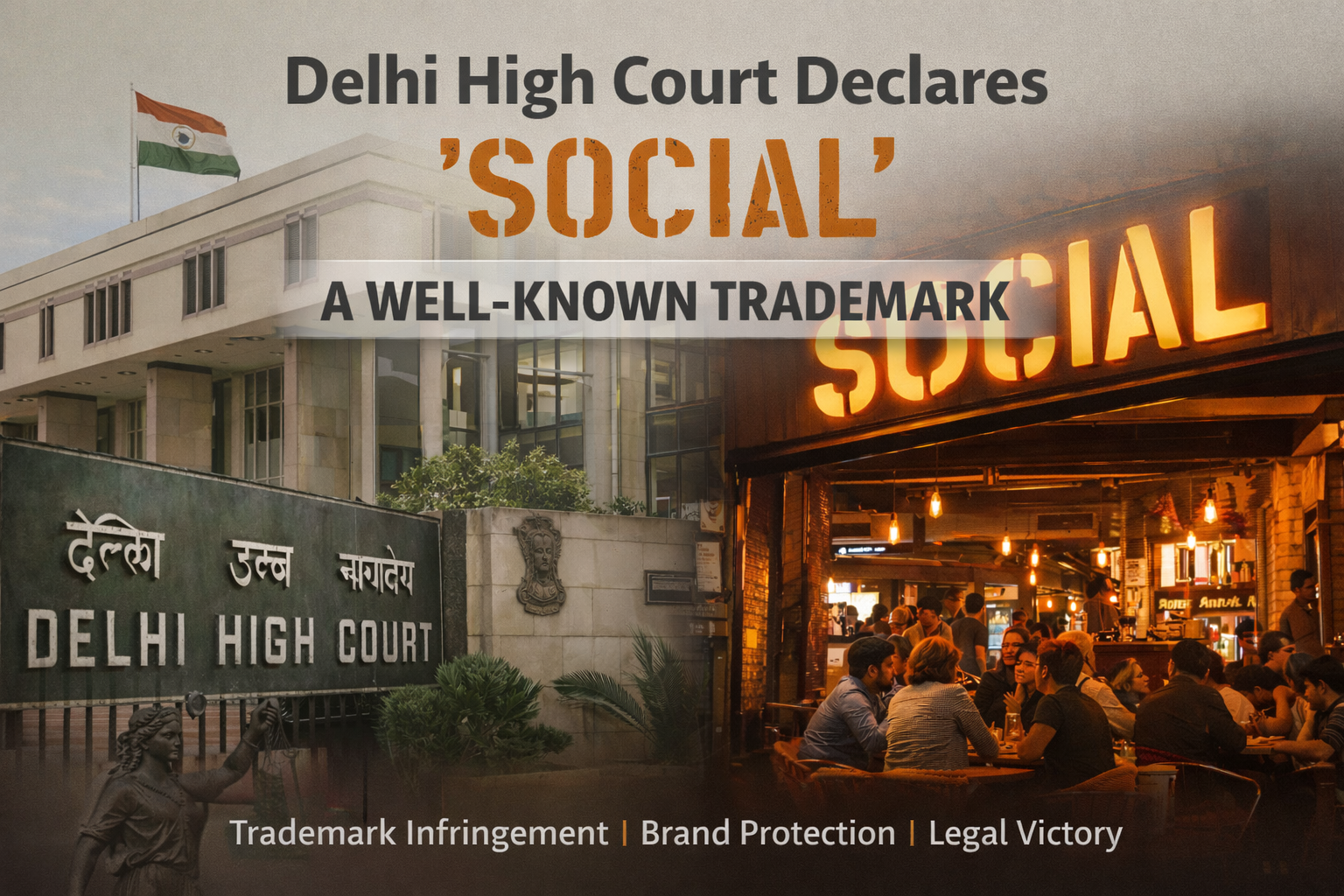
The Delhi High Court has ruled in favour of Impresario Entertainment & Hospitality Pvt. Ltd., officially recognising “SOCIAL” the name of its widely known chain of cafés and bars as a well-known trademark in India. The Court also granted a permanent injunction restraining a Gujarat-based entity from using the mark “The Shake Social” for its restaurant services.
This decision not only protects Impresario’s brand identity but also contributes to the growing jurisprudence surrounding well-known marks in India.
Background to the Dispute
Impresario, the owner of several “SOCIAL” outlets across India each styled after its locality, such as Hauz Khas Social or Carter Road Social approached the Court alleging trademark infringement and passing off. The defendant, operating restaurants in Valsad and Navsari, adopted the name “The Shake Social” for identical hospitality services.
Despite receiving summons, the defendant did not appear or respond, resulting in the matter proceeding ex parte. Impresario demonstrated strong and consistent use of the SOCIAL brand since 2014, supported by documents showing nationwide expansion, high turnover, and extensive promotional investment. The Court accepted that SOCIAL had acquired reputation, distinctiveness, and secondary meaning within the hospitality sector.
Findings of the Court
The Court held that the defendant’s adoption of “The Shake Social” created a clear likelihood of consumer confusion given that both parties were engaged in identical services that is restaurants, cafés, and work-friendly dining spaces. It observed that the defendant’s conduct reflected an attempt to derive undue commercial advantage from the goodwill associated with SOCIAL. The risk of customers associating the defendant with the plaintiff, and the potential for reputational harm, weighed heavily in favour of the plaintiff.
Recognising Impresario’s registered rights and demonstrated market recognition, the Court granted a permanent injunction restraining the defendant from further use and from pursuing its own trademark application.
Most significantly, the Court accepted the plaintiff’s request to classify SOCIAL as a well-known trademark.
Understanding Well-Known Trademarks in India
Statutory Basis
The term well-known trademark is defined under Section 2(1)(zg) of the Trade Marks Act, 1999 as a mark that has substantial recognition among the relevant public and indicates a single source of goods or services, even if consumers have not directly interacted with the brand.
A well-known mark enjoys protection that transcends traditional class boundaries. The recognition of SOCIAL places it on the same spectrum of enhanced protection enjoyed by marks such as TATA, AMUL and BAJAJ.
How a Mark Is Designated Well-Known
A trademark may attain well-known status through:
- Judicial declaration in litigation or enforcement actions; or
- Direct application to the Trade Marks Registry under Rule 124, supported by evidence of market presence, turnover, marketing spend, public recognition and enforcement measures.
In the SOCIAL ruling, the High Court relied on judicial evidence rather than administrative application. Impresario’s sustained commercial presence, strong consumer association and documented enforcement actions were key factors.
Legal Consequences of Well-Known Status
Recognition as a well-known trademark dramatically expands the owner’s ability to protect its brand. The protection is not limited to goods or services for which the mark is registered. Instead, the proprietor may prevent others from adopting identical or deceptively similar marks even in dissimilar classes, where the risk lies in dilution, unfair advantage or erosion of distinctiveness.
A well-known designation also shifts the burden to potential adopters, who must ensure they do not encroach upon the protected mark.
While Indian recognition does not automatically confer international rights, it significantly strengthens enforcement value abroad. Foreign registries and examiners often consider well-known status, particularly in Madrid Protocol filings or cross-border oppositions.
Significance of the Decision
The ruling highlights that even seemingly common or descriptive terms such as “SOCIAL” in this case can acquire well known status when supported by sustained use, consumer recognition and branding strategy. It confirms that brand owners who consistently invest in trade identity, documentation and enforcement can successfully secure broader legal exclusivity.
For businesses, the decision clearly signifies that continuous building and monitoring of brand goodwill is indispensable. Understand here