
Introduction
Identity plays a vital role in determining the value and authenticity of products that are closely associated with their place of origin. Intellectual Property Rights protect such distinctiveness by granting legal recognition to creations, innovations, and traditional products that carry economic and cultural significance. Among the various forms of intellectual property, Geographical Indications hold a unique position as they safeguard products whose quality, reputation, or characteristics are essentially linked to their geographical origin.
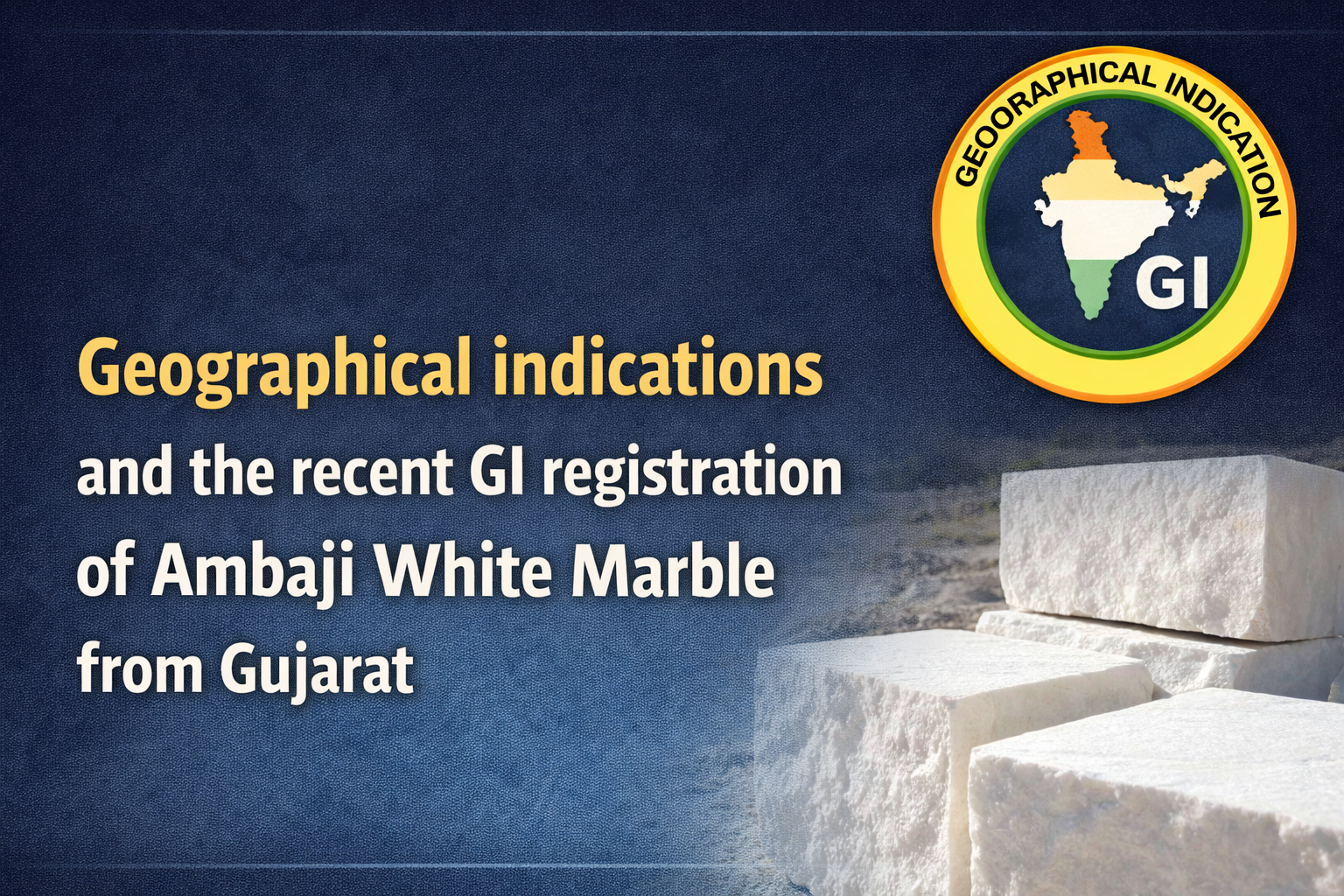
India has increasingly relied on GI protection to preserve traditional knowledge, empower local communities, and promote region specific products in global markets. A recent and noteworthy development in this area is the grant of Geographical Indication status to Ambaji White Marble from Gujarat. This recognition acknowledges the marble’s unique geological attributes, historical use, and cultural relevance, while also strengthening the legal and economic position of those engaged in its production and trade.
Understanding geographical indications under Indian law
Geographical Indications are governed in India by the Geographical Indications of Goods (Registration and Protection) Act, 1999. The law aims to prevent unauthorised use of registered geographical names and to ensure that only genuine products originating from the specified region are marketed under the protected name.
GI protection differs from other forms of intellectual property as it does not vest rights in an individual. Instead, it recognises collective ownership by producers and communities associated with the region. This form of protection ensures that traditional practices, regional expertise, and natural advantages are preserved while providing economic benefits to local stakeholders.
Ambaji White Marble and its regional significance
Ambaji White Marble originates from the Ambaji region of Gujarat and is widely known for its pure white colour, fine grain texture, and high durability. These distinctive qualities are a direct result of the region’s unique geological composition. The marble has traditionally been used in temples, monuments, sculptures, and architectural structures, making it an integral part of India’s cultural and artistic heritage.
The GI registration formally links these characteristics to the Ambaji region, ensuring that only marble quarried from this area can be sold as Ambaji White Marble. This prevents misrepresentation, protects consumer trust, and strengthens the product’s reputation in both domestic and international markets.
Economic impact of GI recognition
The GI tag significantly enhances the commercial value of Ambaji White Marble. Products carrying GI certification often enjoy greater market acceptance due to assured quality and authenticity. This increased demand translates into better pricing, improved bargaining power, and expanded business opportunities for quarry owners, processors, artisans, and small and medium enterprises operating in the region.
GI recognition also facilitates access to export markets, positioning Ambaji White Marble as a premium natural stone in response to the growing global demand for high quality construction materials. As a result, the marble industry contributes to regional development and strengthens Gujarat’s industrial identity.
Cultural preservation and sustainability
Beyond economic benefits, the GI tag plays an important role in preserving cultural heritage and promoting sustainable development. By recognising Ambaji White Marble as a product of historical and traditional importance, GI protection encourages the continuation of local craftsmanship and architectural practices.
Additionally, GI certification promotes ethical mining and responsible extraction practices. Since quality and origin are subject to scrutiny, producers are encouraged to adopt environmentally sustainable methods that ensure long term preservation of natural resources. This balance between economic growth and environmental responsibility is essential for the continued success of heritage based industries.
Challenges in effective GI enforcement
Despite its advantages, the implementation of GI protection faces several challenges. These include weak enforcement mechanisms, the presence of counterfeit products in the market, limited consumer awareness, and compliance costs for small scale producers. Without effective monitoring and awareness initiatives, the benefits of GI protection may not fully reach local communities.
Addressing these challenges requires coordinated efforts by government authorities, industry bodies, and local stakeholders. Strengthening enforcement, improving awareness, and providing institutional support are crucial to ensuring that GI protection delivers long term value.
Conclusion
The grant of Geographical Indication status to Ambaji White Marble marks a significant step toward preserving its authenticity, cultural significance, and commercial potential. By legally protecting its origin and distinctive characteristics, the GI tag enhances market credibility and opens new avenues for local miners, artisans, and enterprises.
While challenges related to enforcement and awareness persist, sustained support and effective governance can transform Ambaji White Marble into a successful model of GI driven regional development. The recognition not only safeguards a valuable natural resource but also reinforces the role of intellectual property law in promoting cultural preservation, economic empowerment, and sustainable growth.
About author:
Aishwarya M P is a law student currently pursuing a BBA LL.B in Ramaiah Institute of Legal Studies. She has a keen academic interest in intellectual property law.